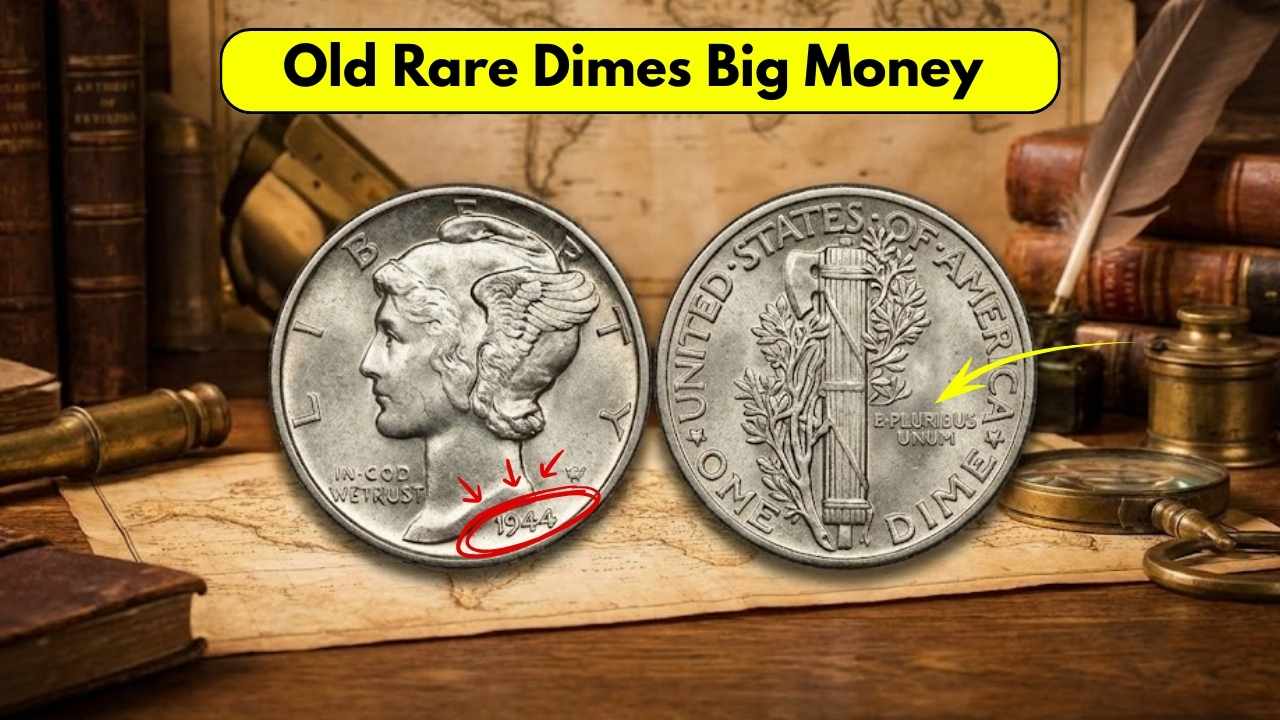
Old Rare Dimes: Old dimes have an incredible history, and many people don’t realize that some of these small coins can now be worth thousands of dollars. What once circulated as ordinary pocket change has become rare treasure due to low mintages, silver content, and unusual minting mistakes. If you have inherited coins or come across old jars filled with change, you might already possess one of these valuable pieces without knowing it.
Dimes may appear ordinary at first glance, but a closer inspection can reveal surprising features that dramatically increase their worth. From silver-era coins to modern errors, every rare dime carries a unique backstory tied to American coinage. Learning which dates and mint marks matter can help you uncover valuable gems that others overlook.
Why Some Old Dimes Become Extremely Valuable
Some dimes gain extraordinary value because of age, rarity, silver composition, and occasional production errors. Dimes minted before 1965 contain 90 percent silver, already making them more valuable than face value. Others were produced in limited quantities or created under unusual mint conditions, resulting in ultra-rare varieties.
Collectors value coins that are difficult to find, especially those preserved with sharp details and minimal wear. Although millions of dimes were created, only a small percentage fall into the rare category. Spotting these special coins requires knowledge of dates, mint marks, and subtle design variations.

The 1894-S Barber Dime
One of the rarest coins in United States history, the 1894-S Barber Dime had a shockingly tiny mintage of just 24 pieces. Fewer than ten are confirmed to exist today, making this dime a legendary rarity. When one appears at auction, it can sell for millions of dollars.
The 1916-D Mercury Dime
This dime was struck in Denver during the first year of the Mercury series. The mint produced a small number of 1916-D dimes, making them scarce from the start. Even worn examples sell for high prices, while high-grade coins are worth a fortune.

The 1942/41 Overdate Mercury Dime
The 1942/41 overdate occurred when dies for two different years were mistakenly stamped together. The overlapping numbers create a visible misprint that collectors instantly recognize. Because only a small number were struck before the error was discovered, this dime remains one of the most famous error coins.
The 1968 No-S Roosevelt Dime
In 1968, a batch of proof dimes was released without the San Francisco mint mark. Since these coins were intended for collectors, missing the mint mark was a major error. Extremely few exist, and when one appears in the market, it sparks strong bidding.

The 1982 No-P Roosevelt Dime
This modern rarity occurred when the mint accidentally used a die missing the P mint mark. Thousands of these error coins entered circulation before the issue was caught. Many people still find them in everyday change, making this one of the most exciting modern discoveries.
How to Identify Old Rare Dimes
Finding valuable dimes requires careful inspection. Begin by examining the date and mint mark, usually located near the edge of the coin. Mint marks like D, S, or P can influence rarity. Look for unusual features such as doubling, missing letters, or misplaced markings. Condition is also crucial; a dime with sharp details and minimal wear is worth far more than a worn example.

If you suspect you found something rare, consider professional grading for authentication and accurate valuation.
Key Highlights
• Several old dimes are worth far more than ten cents
• Major rarities include the 1894-S Barber Dime and 1916-D Mercury Dime
• Overdate and missing mint mark errors greatly increase value
• Silver dimes minted before 1965 have intrinsic precious metal value
• Rare dimes may still be discovered in old collections or pocket change
Final Verdict
Old rare dimes are miniature pieces of American history with impressive value. Whether created through minting accidents or produced in tiny quantities, these coins continue to fascinate collectors. Many people unknowingly hold valuable dimes in drawers, jars, or inherited sets. By learning what features to look for, you may uncover a small coin worth a surprisingly large sum. Always examine old dimes carefully—your next discover might be worth far more than ten cents.
Disclaimer
This article is for informational and educational purposes only. Coin values vary based on market trends, condition, rarity, and authentication. Always consult professional coin graders or reputable dealers before buying or selling rare coins.