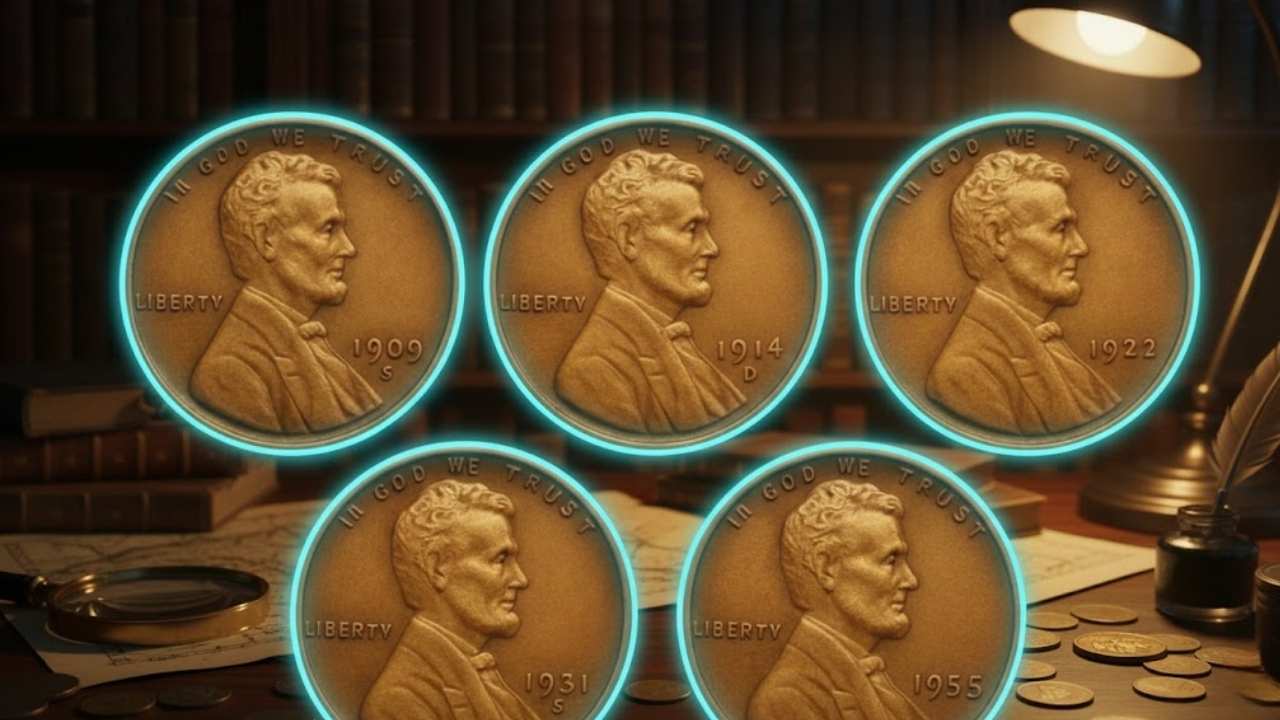
5 Rare Lincoln Wheat Pennies: Lincoln Wheat Pennies, introduced in 1909, remain one of the most iconic and collectible U.S. coins. Their classic design featuring Abraham Lincoln on the front and wheat ears on the back has kept them popular for more than a century. Although millions were produced, only a small number stand out as exceptionally rare and valuable due to limited mintages, special markings, or remarkable minting mistakes.
Why These Wheat Pennies Matter in Today’s Market
The value of certain Wheat Pennies continues to rise as collectors compete for rare dates and scarce mint errors. These standout coins often turn up in old jars, inherited collections, or forgotten rolls, surprising new collectors with impressive potential worth. Their high demand, historical importance, and limited surviving numbers make them some of the most desirable pennies to look for in 2025.
1909-S VDB
Mint: San Francisco
Key Detail: Initials of designer Victor David Brenner
Reason for Value: This first-year issue had a very limited production of only 484,000 coins. Because so few high-quality examples exist, top-grade pieces regularly reach six-figure prices, while circulated coins still command significant value.
1914-D
Mint: Denver
Key Detail: Extremely low mintage
Reason for Value: With just over a million made, the 1914-D is one of the key dates in the series. Strongly preserved pieces are especially prized, frequently selling in the thousands.
1922 No D
Mint: Denver
Key Detail: Missing mint mark error
Reason for Value: Due to a striking issue at the Denver Mint, some 1922 pennies were produced without the “D” mint mark. This rare variety is highly sought after, and examples in excellent condition have brought prices above $20,000.
1931-S
Mint: San Francisco
Key Detail: Low Depression-era production
Reason for Value: Only 866,000 were minted during a time of reduced demand, making this one of the scarcest later-series Wheat Pennies. Collectors pay strong premiums for coins with minimal wear.
1955 Doubled Die
Mint: Philadelphia
Key Detail: Dramatic doubling on date and lettering
Reason for Value: The 1955 doubled die is one of the most famous U.S. coin errors. Even well-circulated examples can sell for hundreds, while coins in near-perfect condition have exceeded $10,000.
How to Identify a Valuable Lincoln Wheat Penny
Careful inspection is essential for spotting rare Wheat Pennies. Checking the date and mint mark helps identify key issues, while looking for unusual features such as doubled text, weak strikes, or missing marks can reveal hidden rarities. Condition also plays a major role; coins with crisp details and minimal wear are far more valuable. Cleaning should always be avoided, as it can reduce a coin’s collectability. Professional grading, when needed, provides authentication and maximizes resale value.
Why Condition Greatly Affects Price
A penny’s preservation level determines much of its market appeal. Coins are evaluated on a 1–70 scale, with higher numbers representing sharper details and cleaner surfaces. High-grade Wheat Pennies often appear nearly untouched despite their age and usually achieve the highest auction results. Collectors protect these pieces in cases or holders to maintain long-term value.
Final Verdict
Lincoln Wheat Pennies continue to attract collectors because they offer history, beauty, and strong potential for financial reward. By studying key dates, rare mint marks, and error varieties—especially those in superior condition—collectors can uncover coins worth far more than their face value. Whether found in old savings tins or purchased from dealers, these rare pennies are among the most exciting U.S. coins to search for in 2025.
Disclaimer
This article is for informational purposes only. Coin values may vary based on demand, grading, authenticity, and market conditions. Collectors should confirm details with certified grading services or professional numismatists before buying or selling rare coins.